

A Second Chance With Eared Grebes and Their Chicks
Last summer I photographed, for the first time, Eared Grebes with their entertaining chicks riding on their backs. This was one of those exciting experiences and memories that can be recalled in an instant, although I had an unhappy ending photographically speaking.
This year I was thrilled to see them with young chicks snuggled in the feathers, especially after mistakenly deleting all of the photos the year before and wondering if I’d have another opportunity.
Not only was I thrilled to see them again, but I was in total awe after learning more about the species.
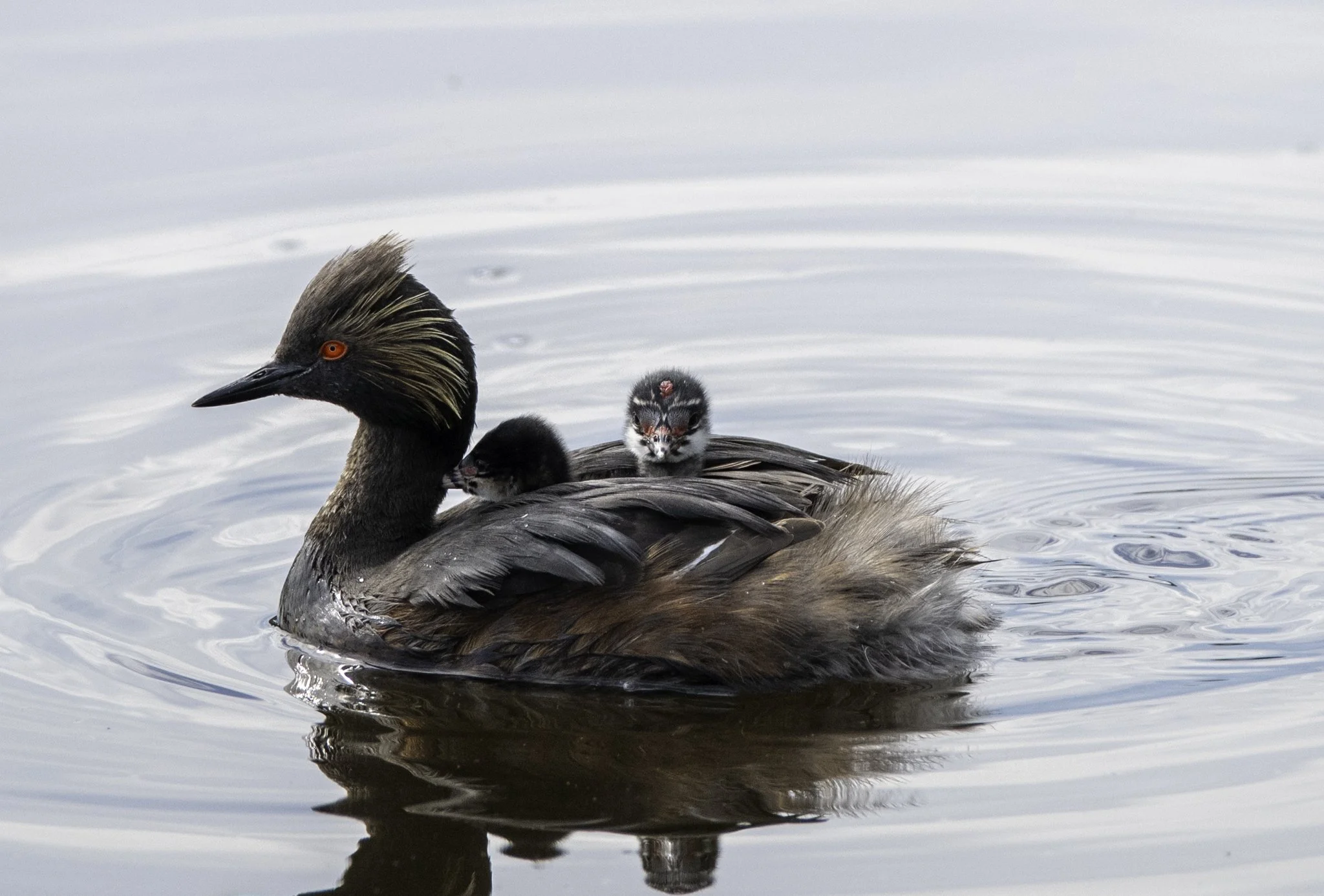
Eared Grebe chicks peek out from their feather bed.
How I got the shots.
At the local lake where these photos were taken, there is a bird lookout that offers different viewpoints, which is wonderful for photography and bird watching.
A boardwalk that widens to a viewing deck offers a higher vantage point and a unique perspective in three directions. Here. I often use a tripod for shots over the railing down to water level, or for birds-in-flight photos.
The boardwalk also extends to a ramp that accesses a lower floating deck. This deck is a meter or so from the water and offers exciting photo and bird-viewing opportunities. At times, the gulls and ducks want to share the space, and that adds to the fun.
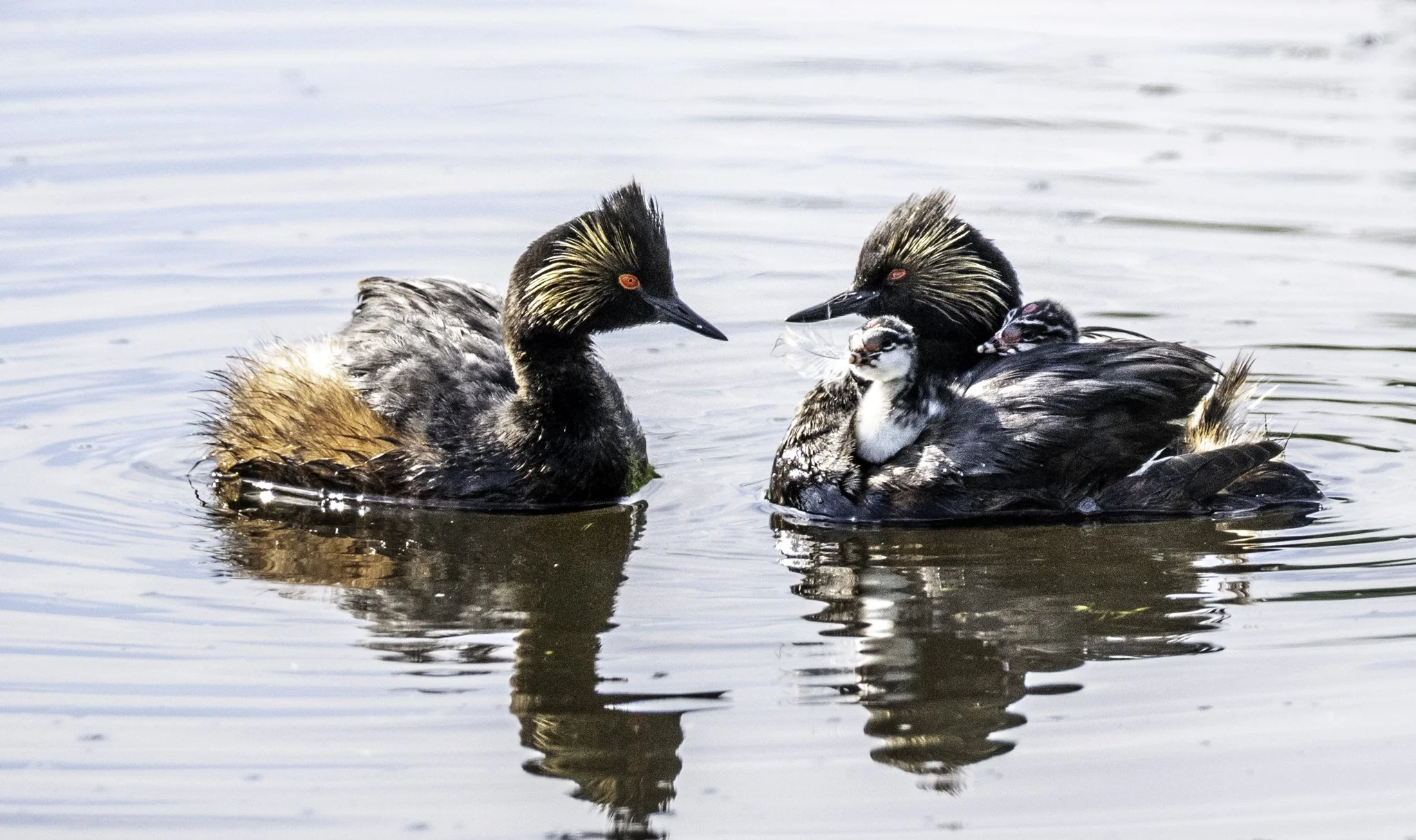
An Eared Grebe brings a feather to its chick.
While enjoying the interaction between the parents and offspring, I was thrilled to see the chick being fed a feather after learning about its significance.
Fun facts about feathers.
Grebes eat prey with rigid exoskeletons, such as brine shrimp and aquatic insects.
This food source can be hard to digest and potentially damaging.
Feathers slow the passage of food, act as a soft barrier for the digestive system, and help filter indigestible food.
Adults and chicks later regurgitate feather pellets, much like owl pellets.
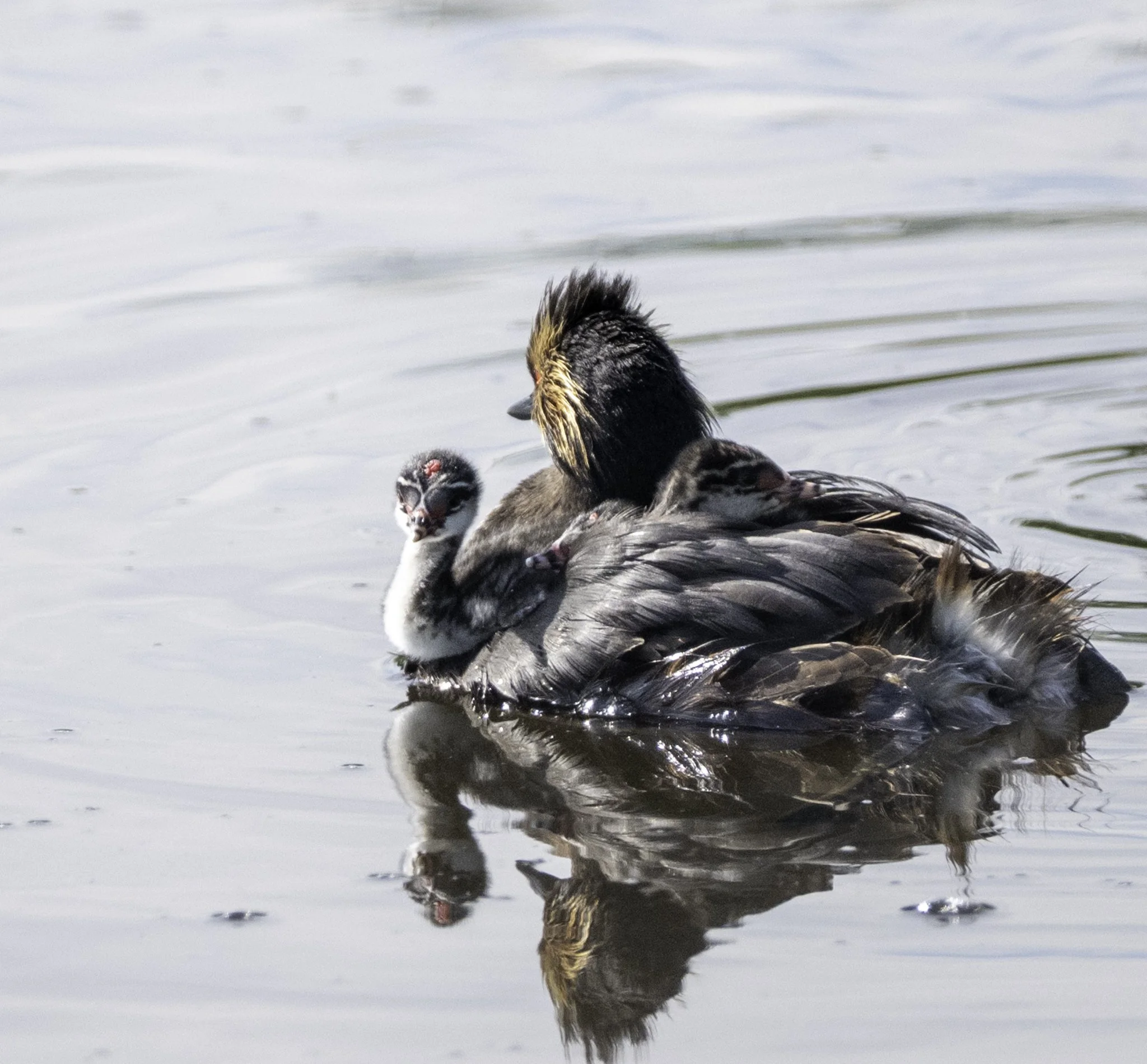
Perched on the edge and taking in the surroundings.
Nature is so incredibly fascinating, and Eared Grebes are among the most specialized aquatic birds in North America.
Fun facts: why they cannot fly for months.
Did you know that they cannot fly for most of the year, and that this is a normal cycle that repeats annually?
Their flight muscles shrink while their digestive organs enlarge to process huge amounts of brine shrimp.
During molt, they lose all their flight feathers at once, making them unable to fly.
They live on the water, feeding and rebuilding strength until new feathers grow in.
After their weight drops and muscles rebuild, they are ready to fly off on their migration.
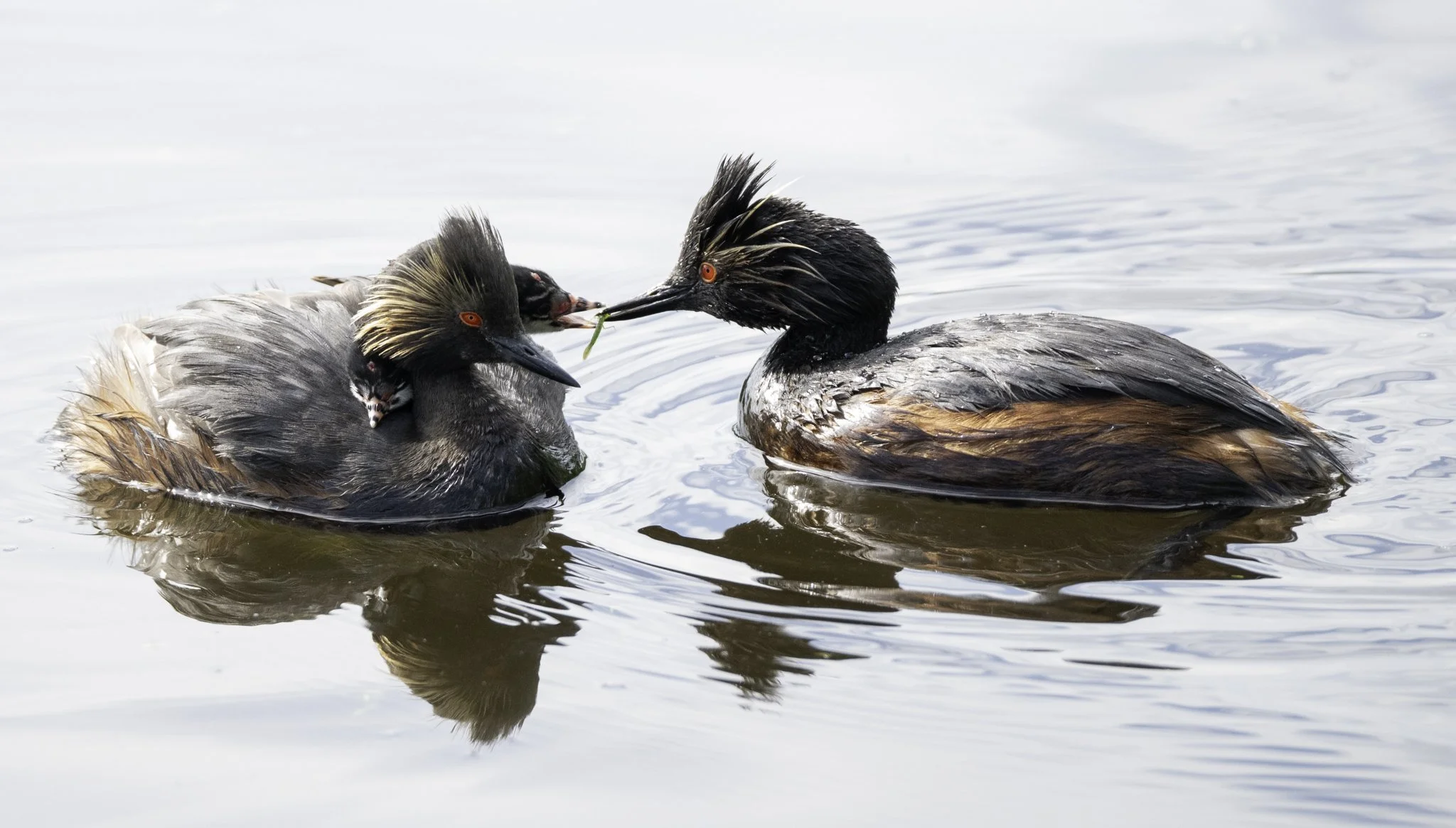
Watching the parents with their chicks made me think that having food delivered and riding around all day would be fun once in a while.
In Conclusion.
Visiting a nearby bird lookout several times a week helped me to shake off last year's disappointment, with even better results because they were closer.
While the light conditions were challenging at times, the enjoyment and experience made up for it.
My camera settings were consistent at f/6.3, ISO 1600, and the shutter speed varied from 1/1000, 1/2000, and 1/2500 of a second, using a 150-600mm lens.
I help photographers understand topics such as f-stops (f/6.3), ISO, and shutter speed on my blog.
