

5 Favourite Nature Photos From the Field
When learning photography, it’s easy to get overwhelmed by camera settings and technical terms. One of the most insightful ways to improve is to look at photos, discover what led to the particular results, and consider why it works.
As part of my “memories” blog series, I’ve chosen 5 of my favourite nature photos from the field. Not only because they’re among my favorites, but each one represents a unique opportunity and a situation for creating a more compelling image.
In this post, I’ll share my camera settings, including aperture, shutter speed, and ISO, along with the camera, lens, and focal length (lens zoom amount). I hope you find these examples helpful as you consider your own photography opportunities and create your favourite nature photos.
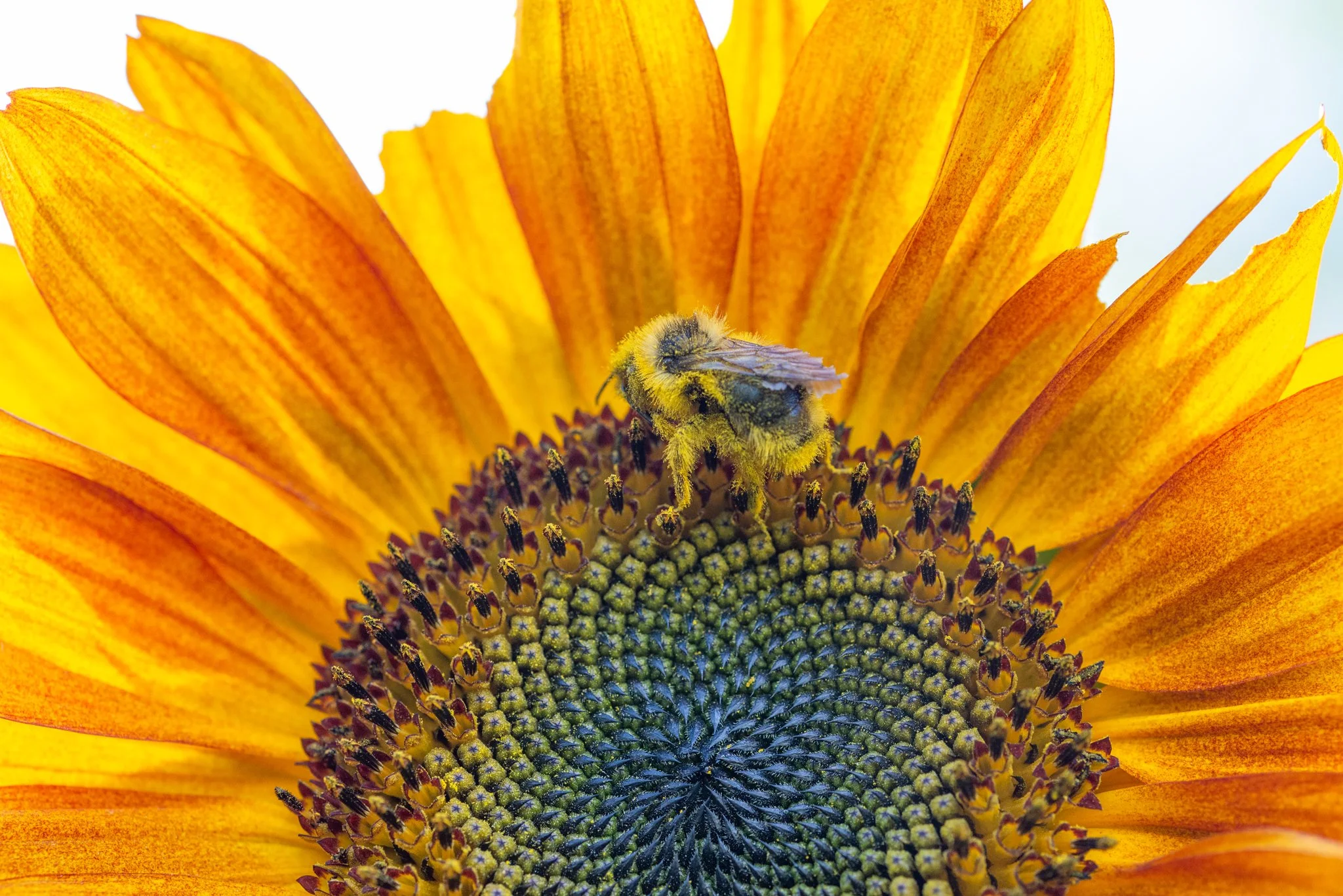
A small and mighty bumblebee, covered in pollen, makes its way around a sunflower. Nikon D600, f/8, 1/320, ISO 2000, focal length 105mm Sigma macro lens.
“Well, now this is intriguing,” I think to myself when discovering this essential pollinator during a stroll amongst the sunflowers.
Curious about what I might capture in a photograph, I set up my tripod and considered my options. I spent a short amount of time simply watching, mainly because it was fascinating, but also to consider the angle I wanted to shoot from and the composition.
Why it’s on my 5 favourite nature photos list:
Positioning and composition of the bee.
The vibrancy of all the colour combinations.
The unexpected discovery of a pollen-covered bee on a sunflower.
A way to create awareness for pollinators through photography.
For the interesting position of its legs, depicting movement as it travels around the plant.
A macro lens is helpful for photographing subjects close-up, as in this example.
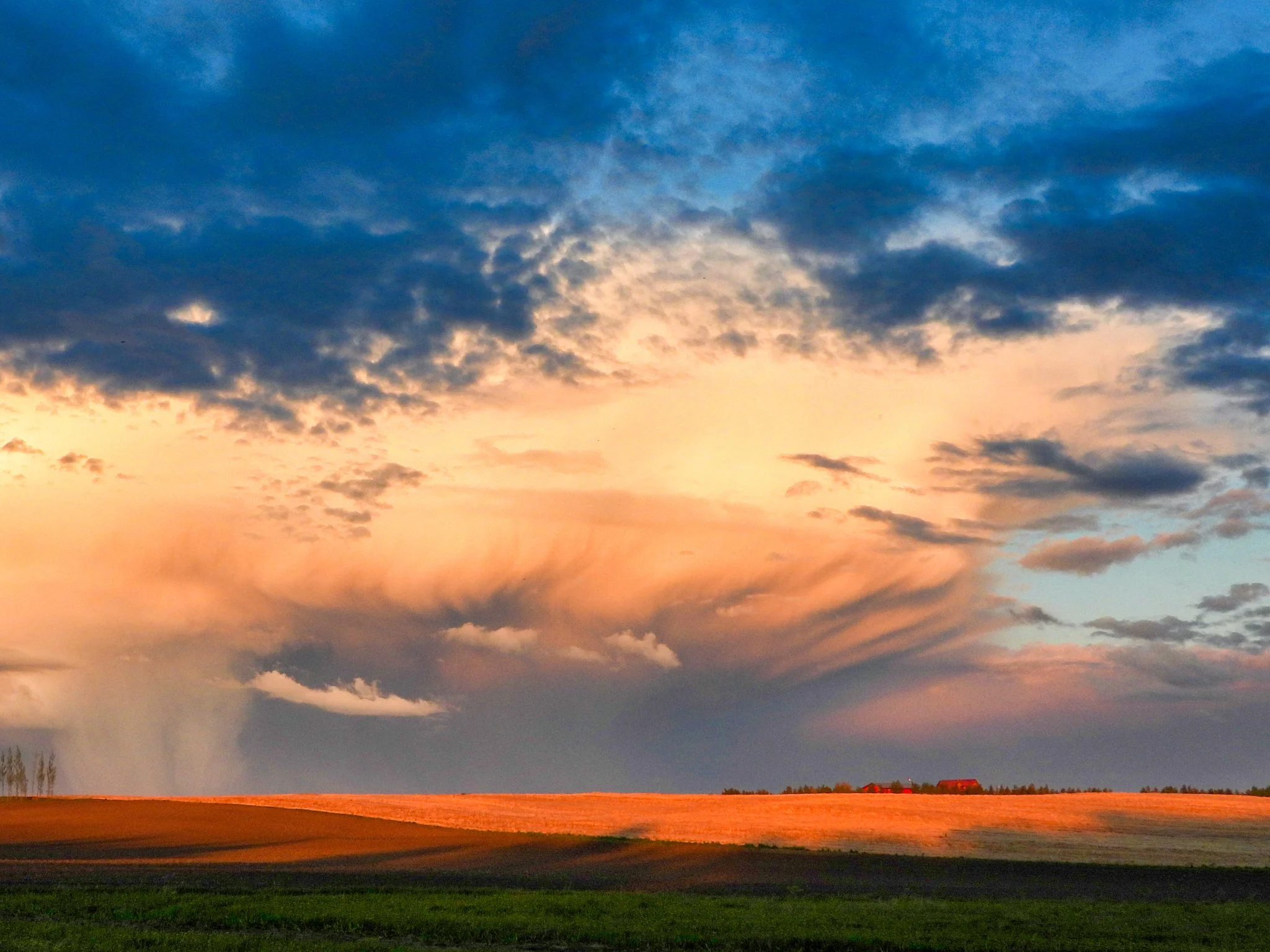
A summer storm collides with the setting sun. Nikon Coolpix P1000, f/3.2, 1/500, ISO 100, focal length 7mm, lens capability 24-3000mm.
I watch in anticipation as summer storm clouds and a setting sun race for the golden light. Hoping for the best before the sun was swallowed up by the clouds behind me, I was rewarded with front light on the landscape and a dizzying array of colour.
Shadows cast by the setting sun add to the landscape, which is filled with the contrast of light and shadow.
Why it’s on my 5 favourite nature photos list:
The vibrance of the scene, and the exhilaration of watching a storm unfold across the landscape.
The shaft of torrential rain and clouds, almost in contradiction to the sunlight on the fields.
.Colliding forces, as it was a matter of timing for whether the golden light would bathe the landscape, before being obliterated by the storm clouds behind me.
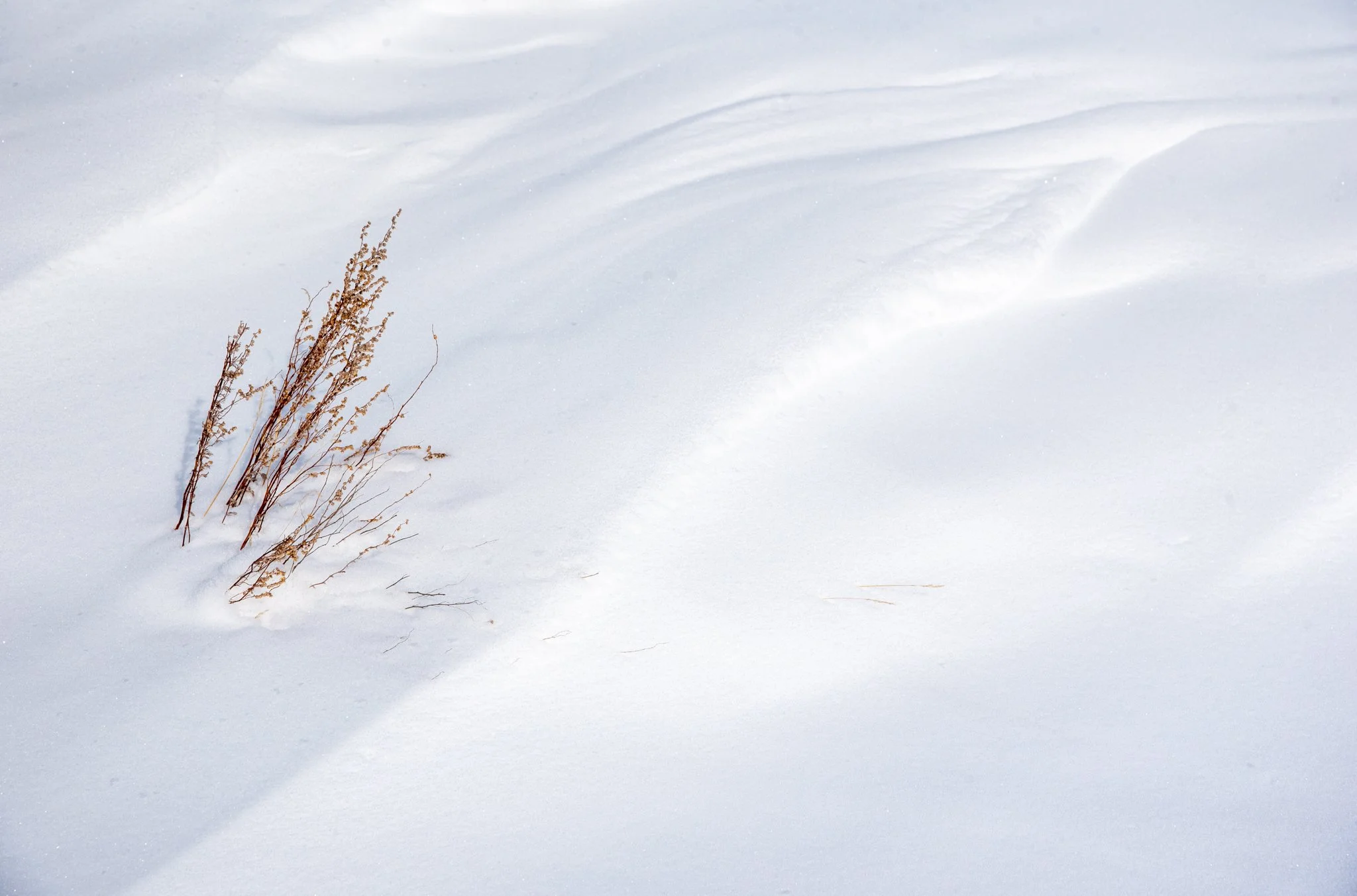
An example of simplicity in a winter landscape. Nikon D750, f/11, 1/4000, ISO 800, focal length 86mm, 28-300mm Nikkor lens.
Driving along the country roads, my intent for the day was to explore for snowdrifts. To observe the light, the shapes, patterns, and sculptures created by the winter wind.
I find snow rows in the ditches left by the grader operators, along with chunks of ice and snow strewn about. Not yet. I keep driving until I spy a section of snow drift disturbed only by the wind. Out with the camera, and I’m ready to consider my composition.
Why it’s on my 5 favourite nature photos list:
For the simplicity of the scene.
The soft curve of the lines and snow drifts.
The creation of diagonal leading lines across the frame.
A single plant, highlighted in a frame of complete whiteness.
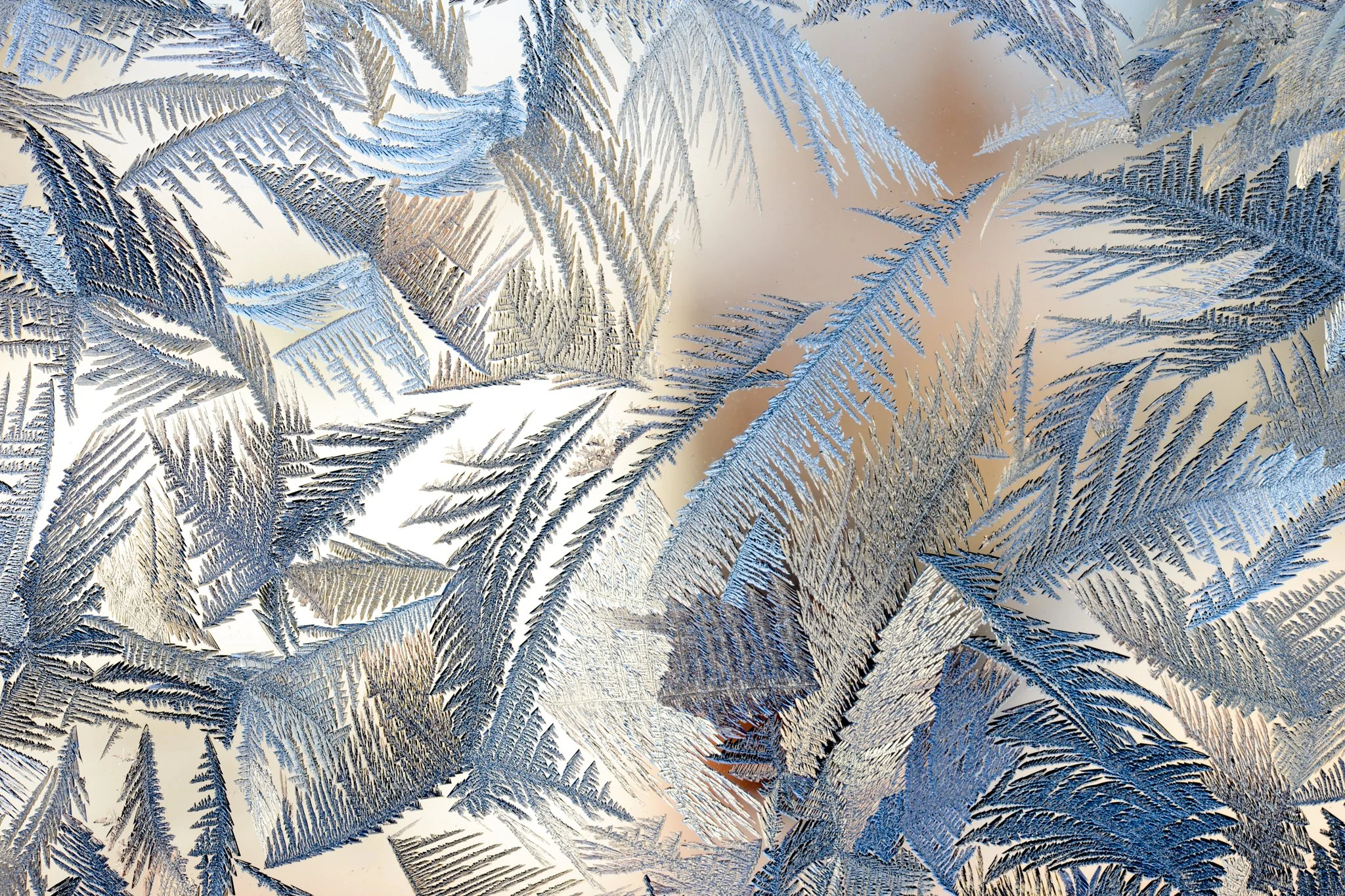
5 favourite nature photos are wherever you find them - on my kitchen window. Nikon D600, f/16, 1/160, ISO 320, focal length 105 mm, Sigma macro lens 105mm.
I admit that I’m no longer as enthused to head out with my camera when it’s really cold. When I am greeted with frost patterns such as these, I don’t need to look at the thermometer to know it’s cold outside.
In this situation, it doesn’t get much better than being able to set up my tripod and enjoy taking photos, keeping myself and my camera toasty warm.
Why it’s on my 5 favourite nature photos list:
It’s one of my favorite frost photos.
Because nature is so spectacular, and I have the opportunity right in front of me.
The colours, designs, and textures create depth and intrigue within the frame.
I am always in awe of the frost on the window, and each time it’s created is unique.
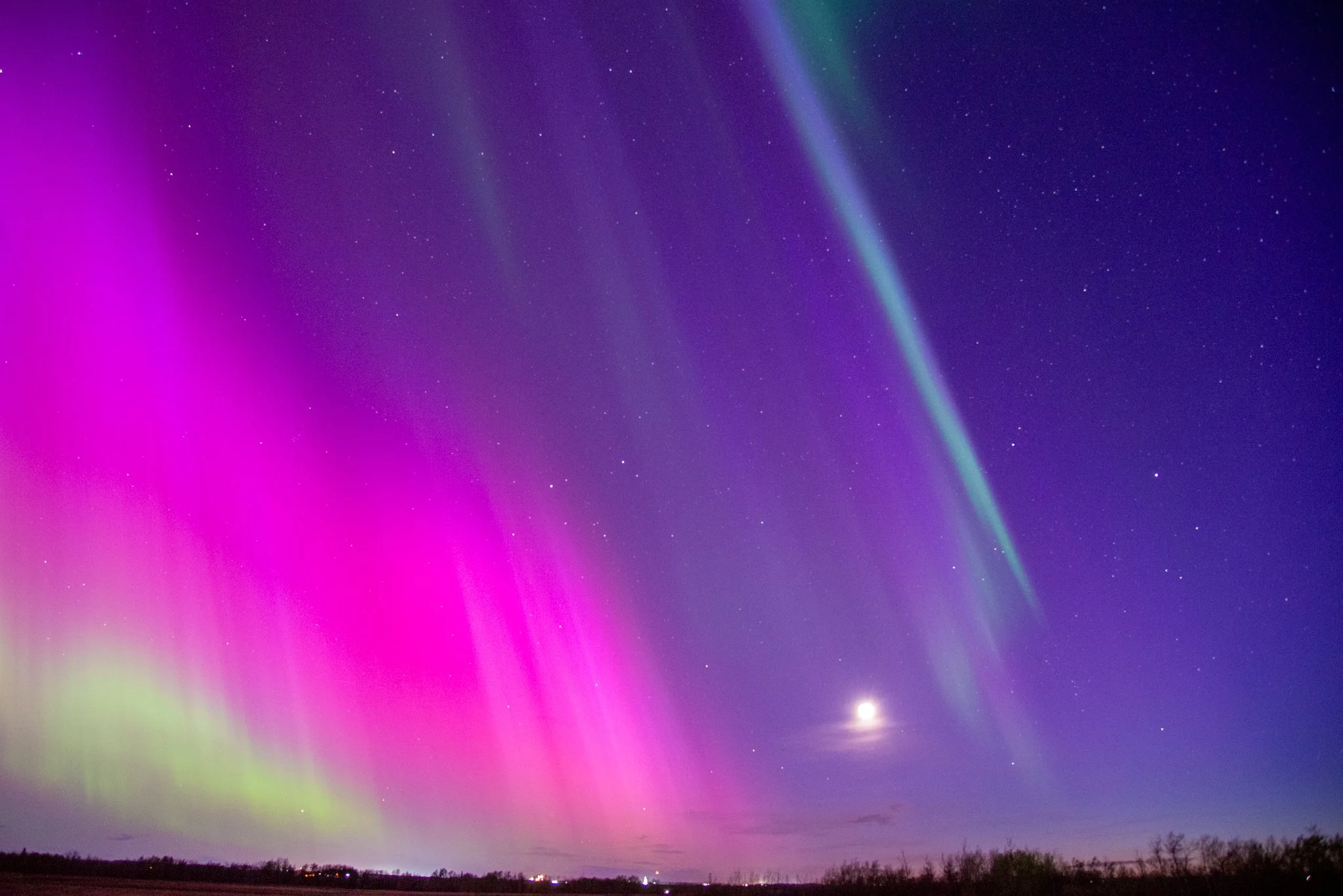
When the northern lights dazzle, and staying up late has me returning home too excited to sleep. Nikon D600, f/4.5, 6” (seconds), ISO 5000, focal length 24mm, Nikkor lens 24-120mm.
Oh, how I wish for more opportunities to photograph the brilliant and breathtaking northern lights. In the meantime, it’s all systems go when the brilliance fills the night sky, and every second is savored.
A tripod is essential for eliminating blurry photos caused by camera shake from slow shutter speeds.
Why it’s on my 5 favourite nature photos list:
As with the frost, it’s one of my favourite images.
The array of colours is not always present to this degree, making it more striking.
The streaks of colour parting to reveal the moon in the background add to the intrigue within the composition.
If you’d like to learn beginner photography tips for taking photos of the northern lights, please click here.
