

Bird Photography Tips: Are You Ready for Unexpected Moments?
Sometimes the best bird (or other) photography opportunities are the ones you didn't know you were waiting for. And that’s exactly how my day unfolded.
My primary objective on this day was to be fortunate enough not only to see the Trumpeter Swans and their cygnets but also to have them within range for photographs.
I certainly wasn't expecting to photograph a dive-bombing Red-winged Blackbird!
At first, I was excited to see the family across the lake and became hopeful when they seemed to be heading my way.
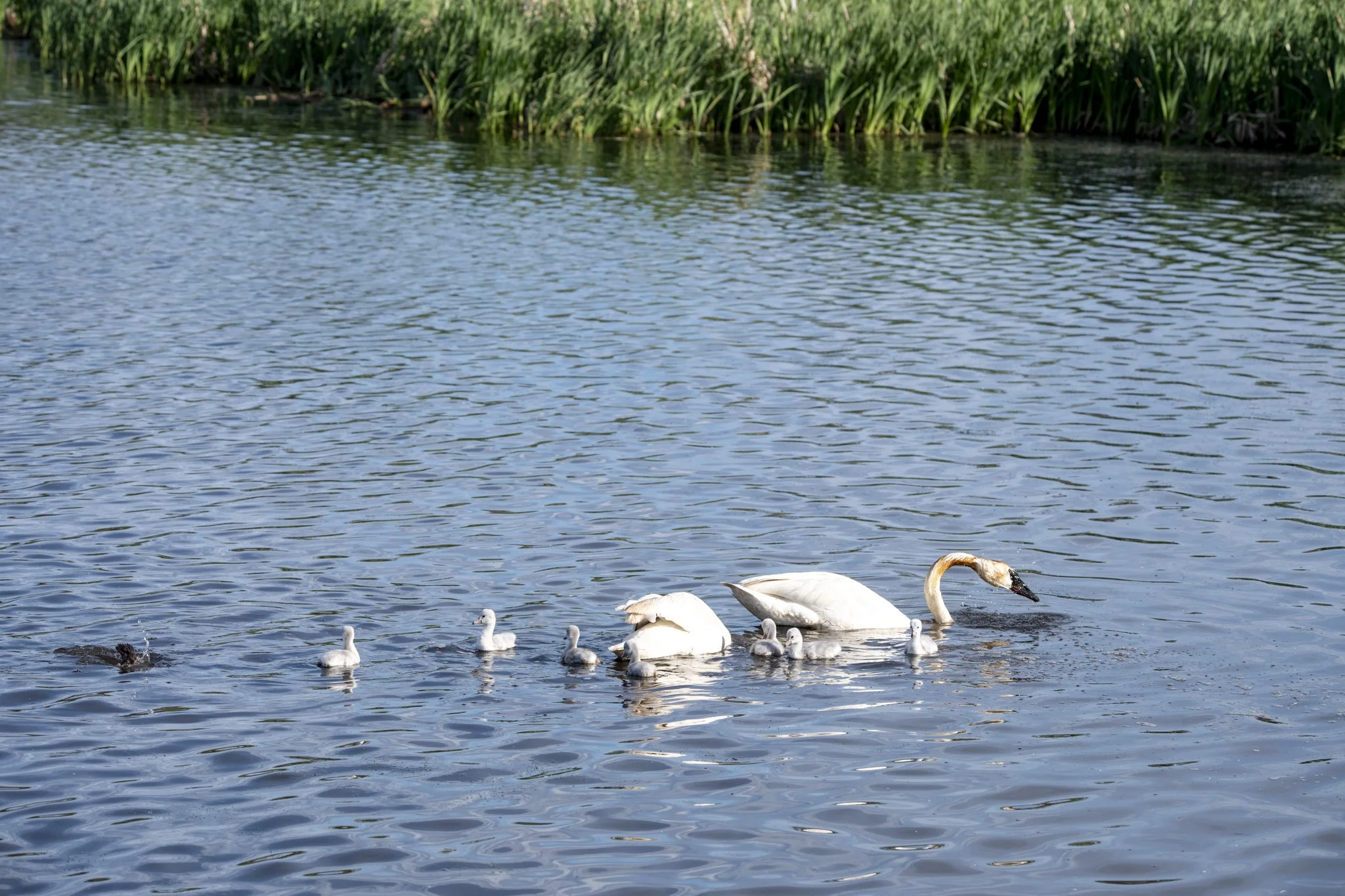
Trumpeter Swans with their cygnets make their way across the lake.
Their approach felt like it was moving at a snail’s pace, so in the meantime, I crossed to the other side of the lookout to see what was going on. Discovering an American Coot and its chick, I spent time watching, taking a few photos, and taking in the scenery.
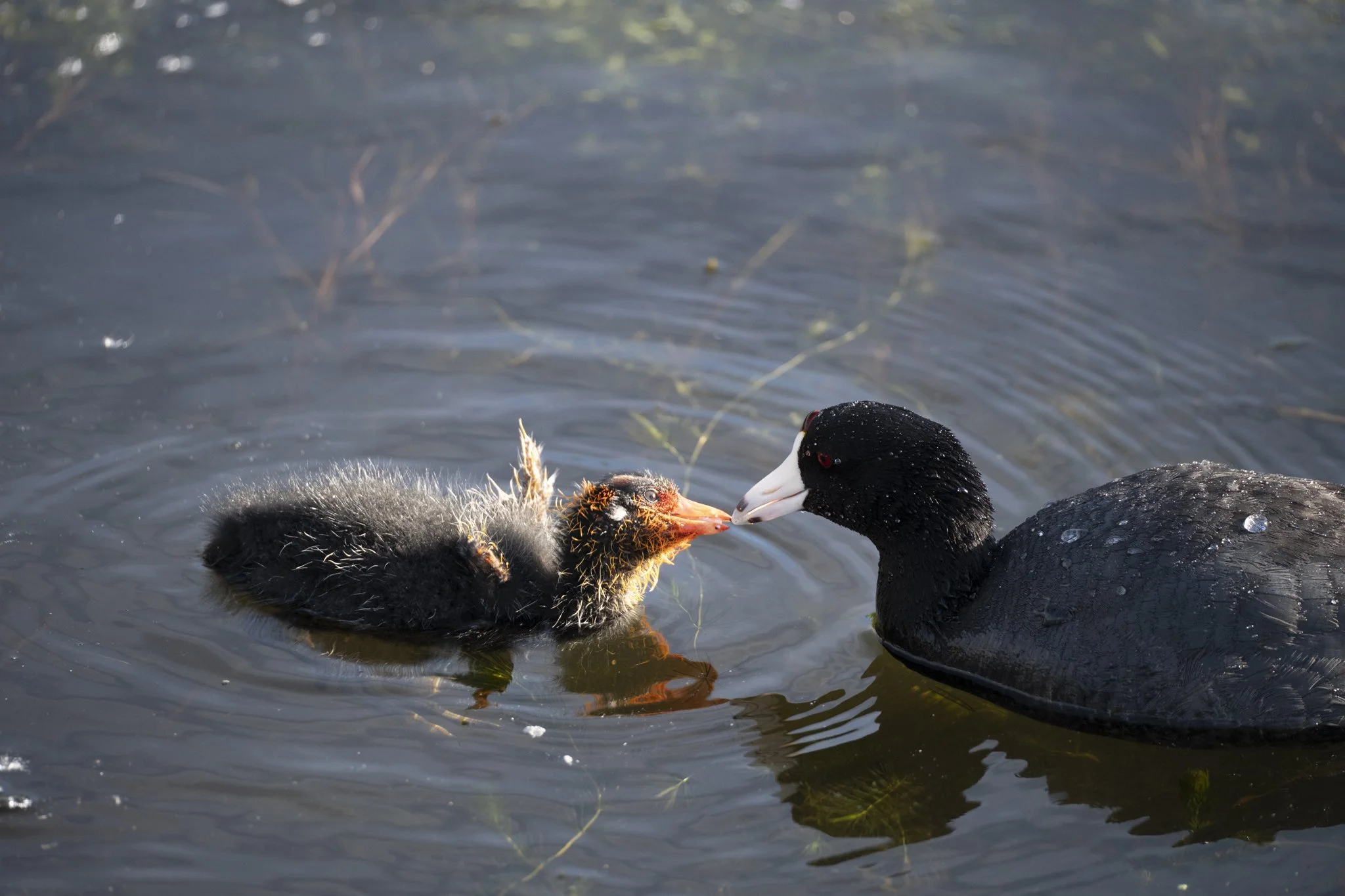
An American Coot feeds its chick.
Realizing that I might be missing something, I soon wandered over to check on the progress of the swan family. I was ecstatic to discover them so close, so I positioned my tripod and settled in to watch them feed.
I might have missed what was happening right in front of me, but by deciding to watch for a few minutes, I witnessed the unexpected.
Suddenly, a Red-winged Blackbird began dive-bombing one of the adults. It was a fascinating turn of events and an unexpected moment in nature and photography!
Fascinated, I watched a few more captivating dive-bombs before I had that sudden photographer thought: why not see if I can capture the action!
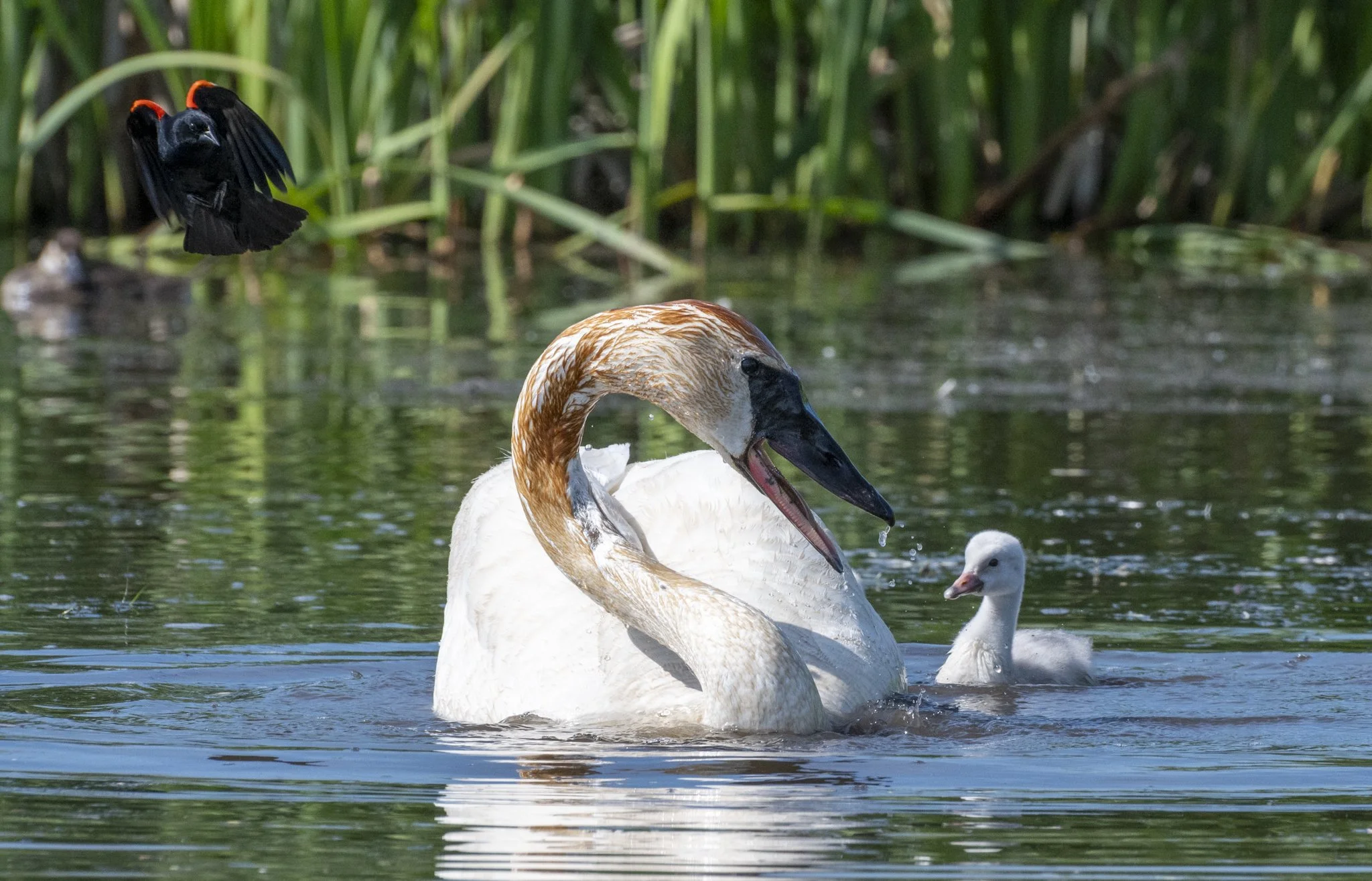
A fearless Red-winged Blackbird attempts to chase a Trumpeter Swan away from its habitat in the cattails.
Bird photography tip: being ready for unexpected moments.
Fortunately, I was prepared to photograph birds, so my camera settings were ready for action. I was using a fast shutter speed for motion photography, which meant I could capture those dive-bombs and “freeze the action.”
This is one of the reasons I like having my camera settings ready ahead of time for the subjects I plan to photograph. This doesn’t mean I’m always prepared; I have been caught unprepared for unexpected photography moments more than once over the years!
However, this time I was ready, even if the camera settings were a secondary factor, as it turned out.
What was first? Taking the time to enjoy nature and watch the goings-on.
And then, when you think you’ve already planned for what you're going to photograph, something happens that you never anticipated - and the best and most thrilling photography opportunity may just be the one you didn't know you were waiting for.
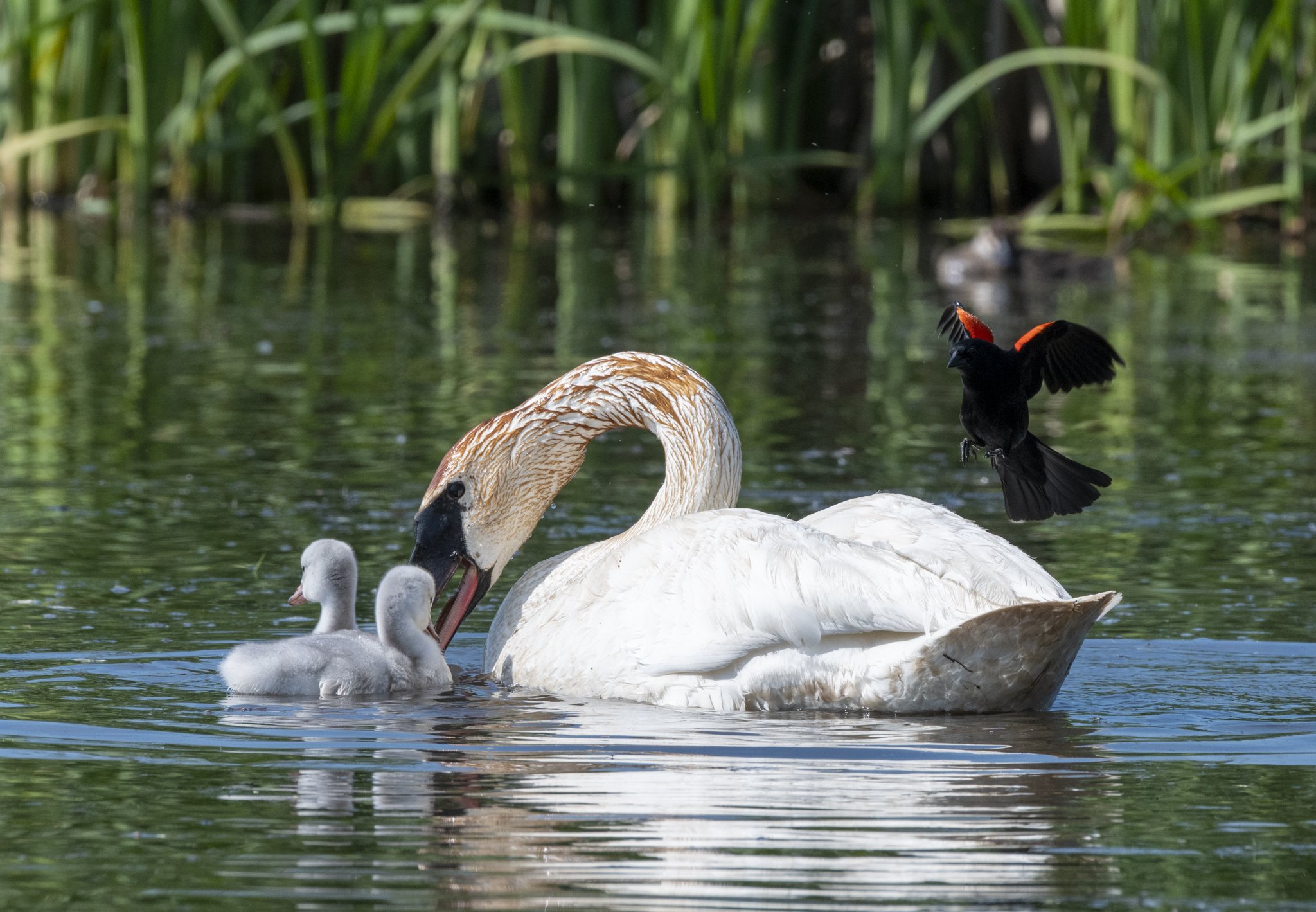
A Red-winged Blackbird is about to touch down on a Trumpeter Swan.
Are you ready?
Capturing the action meant watching for the bird to launch from the cattails, noting its approach from which direction, and anticipating when to press the shutter button.
Not every shot worked out:
Some were out of focus.
A few I missed completely.
The bird went “this way” when I anticipated “that way.”
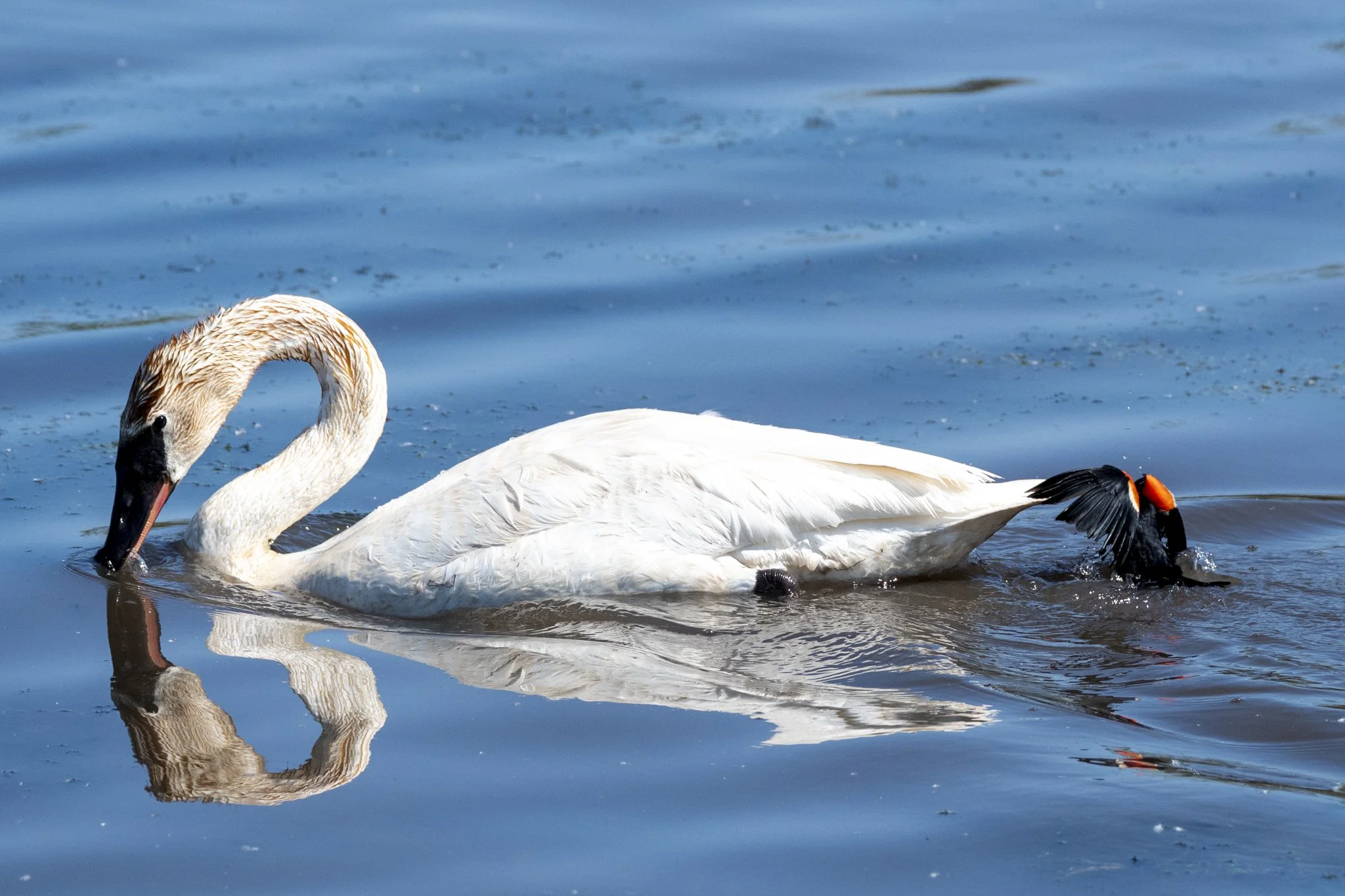
The Trumpeter Swan and the Red-winged Blackbird.
When going through photos on my computer afterward, I discovered even more fun and fascinating bird behaviour, such as:
Realizing that it briefly made physical contact.
Being surprised to see it in the water like that, and I’m curious.
Studying the numerous approach directions, the body, and the wings.
Finally, the swans decide to move on and head back across the lake as I capture one final, memorable, and unexpected moment in photography.
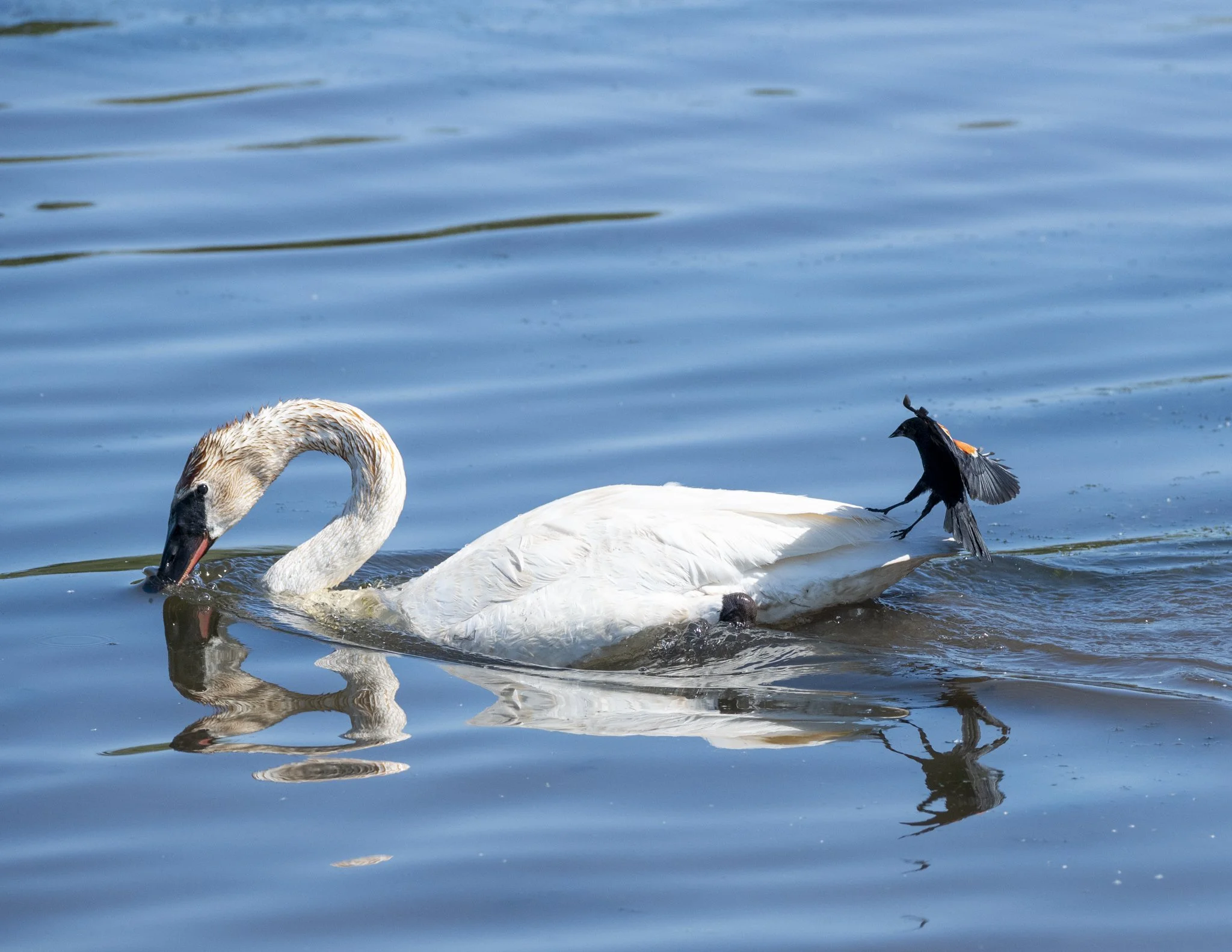
One final attack to keep the intruder moving away from the bird’s habitat.
In conclusion:
The takeaway from this encounter is to watch and wait for something to unfold within the environment.
I went there hoping to photograph the swans, and a dive-bombing blackbird wasn't part of the plan. At first, I was enjoying the unexpected bird behavior unfolding before me. Then came that sudden thought: Wait—take photos!
Remember, sometimes the best and most thrilling photography opportunities are the ones you didn't know you were waiting for.
It’s like when you decide it’s time to pack up and go home, and things suddenly get exciting. I have lost count of how many times that has happened to me!
Finally, if you're interested in how and why I use fast shutter speeds when photographing action, I go into more detail in my post about fast shutter speed for motion photography.
